

The ROI of Investing in Yourself
Why the Most Valuable Investment Rarely Shows Up on a Spreadsheet
If you are like most high-achieving professionals, you are used to evaluating decisions based on return on investment. You look at numbers, timelines, risk, and measurable outcomes. You want proof that the money you spend today will create value tomorrow. That mindset has likely served you well in your career, your business, or your creative work.
Yet the most important investment you will ever make does not come with a neat projection or guaranteed percentage return. Investing in yourself rarely fits cleanly into a spreadsheet, but it quietly compounds over a lifetime. The confidence you build, the clarity you gain, and the habits you change often deliver returns that far exceed what any traditional financial asset can offer.
The challenge is that self-investment often asks for trust before it offers certainty. It requires you to believe that growth you cannot fully measure today will still change the trajectory of your future. That leap is uncomfortable, especially if you have been taught to play it safe with your money or to prioritize everyone else’s needs before your own.
Why We Struggle to Measure the ROI of Personal Growth
Traditional investments are easy to track because their success is defined narrowly. A portfolio goes up or down. A business investment produces revenue or it does not. Self-investment operates differently because its returns are layered and cumulative. The benefits often show up years later, in decisions you make with more confidence or opportunities you recognize sooner than you once would have.
When you invest in yourself, you are not buying a single outcome. You are strengthening your ability to make better choices repeatedly. That might look like avoiding a financial mistake that would have cost you tens of thousands of dollars, or finally setting boundaries that protect your energy and income. These moments rarely get labeled as “returns,” but they are exactly that.
This is especially true when it comes to financial education and mindset. Many people focus solely on income, assuming more money will automatically fix the problem. Without the knowledge, discipline, and self-trust to manage it well, however, higher income often leads to higher stress instead of freedom. The ROI of self-investment shows up when money stops controlling your decisions and starts supporting your values.
The Compounding Effect No One Talks About
One of the most powerful aspects of investing in yourself is compounding. A single insight can reshape how you approach money, work, and life for decades. Unlike material purchases, which depreciate quickly, personal growth tends to appreciate over time. The skills and clarity you gain today continue to influence future decisions long after the initial investment is forgotten.
Think about how one mindset shift can affect multiple areas of your life. Improved financial awareness can change how you negotiate contracts, plan for taxes, save for the future, and talk to your family about money. Each improved decision builds on the last. Over time, the gap between where you are and where you could have been without that investment becomes impossible to ignore.
This compounding effect is why investing in yourself often feels expensive upfront but invaluable in hindsight. Many people look back and realize that the moments they chose growth over comfort were the turning points that reshaped everything that followed.
Self-Investment as a Form of Self-Trust
At its core, investing in yourself is an act of self-trust. It is a decision to believe that you are capable of growth, change, and stewardship over your future. For many high-earning individuals, especially those who did not grow up with access to financial education, that belief does not come easily.
You may have been taught to survive, not to plan. You may have learned how to generate income without ever learning how to protect or grow it intentionally. In those circumstances, self-investment can feel risky, even indulgent. The truth is that refusing to invest in yourself often carries the greatest risk of all: staying stuck in cycles that no longer serve you.
When you invest in yourself, you are not just purchasing information or guidance. You are reinforcing the belief that your future is worth planning for and that you deserve tools that match your potential. That belief alone can change how you show up in rooms, negotiate opportunities, and envision what is possible for your life.
Why Financial Self-Investment Is Different
Financial self-investment deserves special attention because money touches nearly every aspect of your life. Your ability to build wealth is influenced as much by mindset and behavior as it is by income or market performance. Without addressing those deeper layers, even well-intentioned strategies can fall apart under pressure.
This is why Michelle Richburg has spent years working with high-income earners, creatives, and entrepreneurs who look successful on paper but feel uncertain behind the scenes. She saw a pattern of people earning more than ever before while still feeling anxious, reactive, or unprepared for the future. The issue was rarely intelligence or ambition. It was a lack of structured support and a healthy relationship with money.
The work behind Beyond The Bag was born from this reality. The mission was never about creating another course for the sake of content. It was about building a space where people could finally slow down, understand their financial patterns, and learn how to move with intention instead of fear. That kind of transformation cannot be reduced to a single metric, but its impact can last a lifetime.
The Lifelong Returns You Cannot Put a Price On
When you invest in yourself financially, the returns often extend far beyond money. You gain peace of mind, clarity, and the ability to make decisions without panic. You begin to see money as a tool instead of a source of stress or shame. These shifts affect your health, your relationships, and your sense of purpose.
You may also find that self-investment changes how you view opportunity. Instead of asking whether you can afford to grow, you begin asking whether you can afford not to. That shift alone can open doors you once dismissed as unrealistic. Over time, the cumulative effect of those choices can reshape your entire financial narrative.
These outcomes are difficult to quantify, but they are deeply felt. They show up when you sleep better at night, when you stop second-guessing every financial decision, and when you finally feel aligned with the life you are building.
Preparing for What Comes Next
As the Beyond The Bag ecosystem prepares to launch, this season is about reflection and readiness rather than urgency. It is an opportunity to ask yourself whether you are willing to invest in the version of you that wants more clarity, stability, and freedom. There is no pressure to have everything figured out now. Growth begins with awareness and intention.
If you feel drawn to this conversation, you are invited to join the Beyond The Bag waitlist to receive updates and a special bonus when enrollment opens . Joining the waitlist is simply a way to stay connected to the mission and be informed as details unfold, without committing to anything before you are ready.
You are also encouraged to sign up for the Richburg Enterprises newsletter, where Michelle regularly shares insights, tools, and perspectives on financial freedom, mindset, and long-term wealth building. These resources are designed to support you right where you are, even before the course and community officially launch.
A Quiet but Powerful Decision
Investing in yourself rarely comes with fireworks or instant validation. It is often a quiet decision made long before the results are visible. Over time, however, it becomes one of the most powerful choices you can make. The ROI may not show up on a balance sheet, but it will reveal itself in the life you are able to build with confidence and intention.
If you are ready to stay connected, learn more, and be part of a community rooted in purpose-driven financial growth, joining the waitlist and newsletter is a meaningful first step. Your future self will thank you for it.
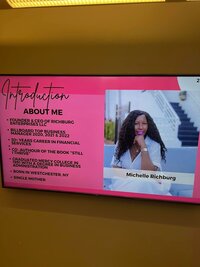





At Richburg Enterprises, we strongly believe in the power of financial independence and security for everyone.
About Richburg