

The Pressure to Maintain a Lifestyle You Never Meant to Build
At some point, you may look at your life and realize that it feels far more expensive than it ever needed to be. Your income may look strong on paper, yet your breathing room feels narrow. Your calendar is full, your obligations are heavy, and your spending seems locked into patterns you do not remember consciously choosing. This experience is far more common than most people admit, and it has very little to do with irresponsibility or lack of discipline.
The pressure to maintain a lifestyle you never meant to build often comes from forces that are subtle, emotional, and deeply human. It is shaped by social expectations, identity-driven spending, cultural narratives around success, and unspoken rules about what your life is supposed to look like once you reach a certain level. Understanding this pressure is not about assigning blame or shame. It is about reclaiming agency and aligning your financial life with your actual values rather than inherited expectations.
How Lifestyle Drift Happens Without Your Consent
Lifestyle drift rarely announces itself loudly. It usually arrives quietly, disguised as progress. A new job comes with a higher salary, and along with it come nicer clothes, better dinners, and upgraded housing. Each decision feels reasonable in isolation, and none of them seem reckless. Over time, however, these upgrades stack on top of one another until your fixed expenses consume far more of your income than you intended.
What makes this particularly challenging is that many of these expenses are socially reinforced. Friends celebrate the visible markers of success. Family members may see your growth as proof that you are “doing well” and expect your generosity or availability to expand accordingly. Even professional environments subtly reward certain appearances and lifestyles, especially for entrepreneurs, executives, creatives, and high earners whose income is tied to perception.
The result is a life that looks successful from the outside but feels restrictive on the inside. You may find yourself working harder not to build freedom, but simply to keep everything from collapsing.
Identity-Driven Spending and the Cost of Being “Enough”
One of the most powerful drivers behind unintentional lifestyles is identity-driven spending. This is spending that is tied not to need or joy, but to who you believe you must be in order to be accepted, respected, or safe. These beliefs are rarely conscious, yet they strongly influence financial behavior.
For many people, especially those who have had to work hard to reach their current position, money becomes intertwined with self-worth. Certain purchases become symbols of having “made it.” Declining those purchases can feel like regression, even when they no longer serve you. This is particularly true for individuals who carry the weight of representation, whether that is being the first in their family to reach a certain level or navigating professional spaces where visibility feels like protection.
When spending becomes an extension of identity, changing your financial habits can feel emotionally risky. It may feel like you are letting go of a version of yourself that others recognize, even if that version is exhausting to maintain.
The Emotional Weight of Social Expectations
Social expectations play a significant role in sustaining lifestyles that feel misaligned. Once people associate you with a certain standard of living, stepping away from it can feel uncomfortable. You may worry about being judged, misunderstood, or perceived as struggling, even when the decision is rooted in intention rather than scarcity.
This pressure is amplified by social media, where curated images of success create a narrow and often unrealistic definition of what financial achievement looks like. Even when you intellectually understand that these images are incomplete, repeated exposure can subtly recalibrate your sense of normal. Over time, this can push your spending higher simply to keep pace with an invisible benchmark.
It is important to name this pressure honestly. You are not weak for feeling it. You are human, and you live within systems that constantly signal what is acceptable, admirable, and worthy of attention.
Curiosity is More Powerful Than Judgment
Many people attempt to correct lifestyle misalignment through self-criticism. They tell themselves they should have known better, been more disciplined, or planned further ahead. Unfortunately, shame rarely leads to sustainable change. It often creates avoidance, secrecy, and paralysis, all of which make financial clarity harder to achieve.
A healthier approach begins with curiosity. Instead of asking why you failed, you can ask how your current lifestyle came to be. What needs was it meeting at the time? What fears was it protecting you from? What version of yourself were you trying to honor or escape? These questions create space for insight rather than judgment.
When you remove shame from the equation, you gain the freedom to redesign your financial life in a way that supports both your well-being and your long-term goals.
Reclaiming Alignment Without Burning Everything Down
Realigning your lifestyle does not require dramatic deprivation or sudden upheaval. It begins with awareness and intentional choice. You may start by identifying which expenses genuinely support your values and which ones exist primarily to satisfy external expectations. This process often reveals that not everything needs to change, only what no longer fits.
It is also important to acknowledge that alignment looks different at different stages of life. What felt necessary during a season of growth, healing, or visibility may not be required forever. Giving yourself permission to evolve financially is not a step backward. It is a sign of maturity and self-trust.
For many people, this realignment is less about cutting spending and more about redefining success. When success shifts from looking a certain way to feeling a certain way, financial decisions become clearer and less emotionally charged.
The Mission Behind a New Kind of Financial Conversation
This is precisely the tension that led Michelle Richburg to begin developing what will soon become the Beyond The Bag community. Through years of working with high earners, creatives, and entrepreneurs, she observed a consistent pattern. People were making money, yet they were quietly overwhelmed by the pressure attached to it. They did not lack ambition or intelligence. They lacked space to unpack the emotional and cultural narratives driving their financial choices.
Our work has always centered on helping people build a healthier relationship with money, one that honors their values, faith, and long-term legacy rather than performative success. The work behind Beyond The Bag was born from a desire to create a space where these conversations could happen honestly, without judgment, and without the assumption that more income automatically equals more freedom.
The goal was never to tell people what they should want. It was to help them understand why they want what they want, and whether that desire is truly theirs.
Creating Room for Freedom Before It Has a Name
Long before the course and community were formally introduced, the underlying mission was already clear. Financial freedom is not just about numbers. It is about relief. It is about the ability to make decisions without fear of losing your footing or your identity. It is about building a life that feels sustainable, not just impressive.
That kind of freedom requires education, reflection, and community. It requires tools, yes, but it also requires permission to slow down and question long-held assumptions. This is why the conversation begins well before any official launch. Awareness is the first step, and it is one you can take right now.
If you have ever felt trapped by a lifestyle that no longer reflects who you are or where you want to go, you are not behind. You are becoming aware.
Staying Connected to What Comes Next
As this work continues to unfold, the best way to stay informed is by joining the Richburg Enterprises newsletter. This is where Michelle shares insights, reflections, and practical tools designed to help you build financial clarity and confidence at your own pace. Subscribers will also be the first to receive updates and announcements about when the Beyond The Bag course and community officially open, along with resources that support your journey toward financial freedom.
You can also explore related conversations on money mindset and long-term planning through the Richburg Enterprises blog, which offers thoughtful guidance for navigating wealth with intention.
You do not need to have everything figured out to take the next step. Sometimes, the most powerful decision you can make is to stop maintaining a life you never meant to build and start listening to what you actually want to carry forward.
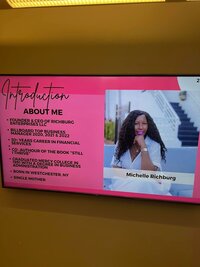





At Richburg Enterprises, we strongly believe in the power of financial independence and security for everyone.
About Richburg